
Rethinking Friendship With God Through John 15:15
Rethinking Friendship With God Through John 15:15
Feb 17, 2026
Some conversations change us—not because of what was said, but because of how deeply we were heard. The kind where time slows, distractions fade, and the space between two people feels safe enough for truth. Most of us can picture a moment like that: sitting across from someone who isn’t rushing us, isn’t waiting to interrupt, and isn’t keeping score. Just presence. Just care.
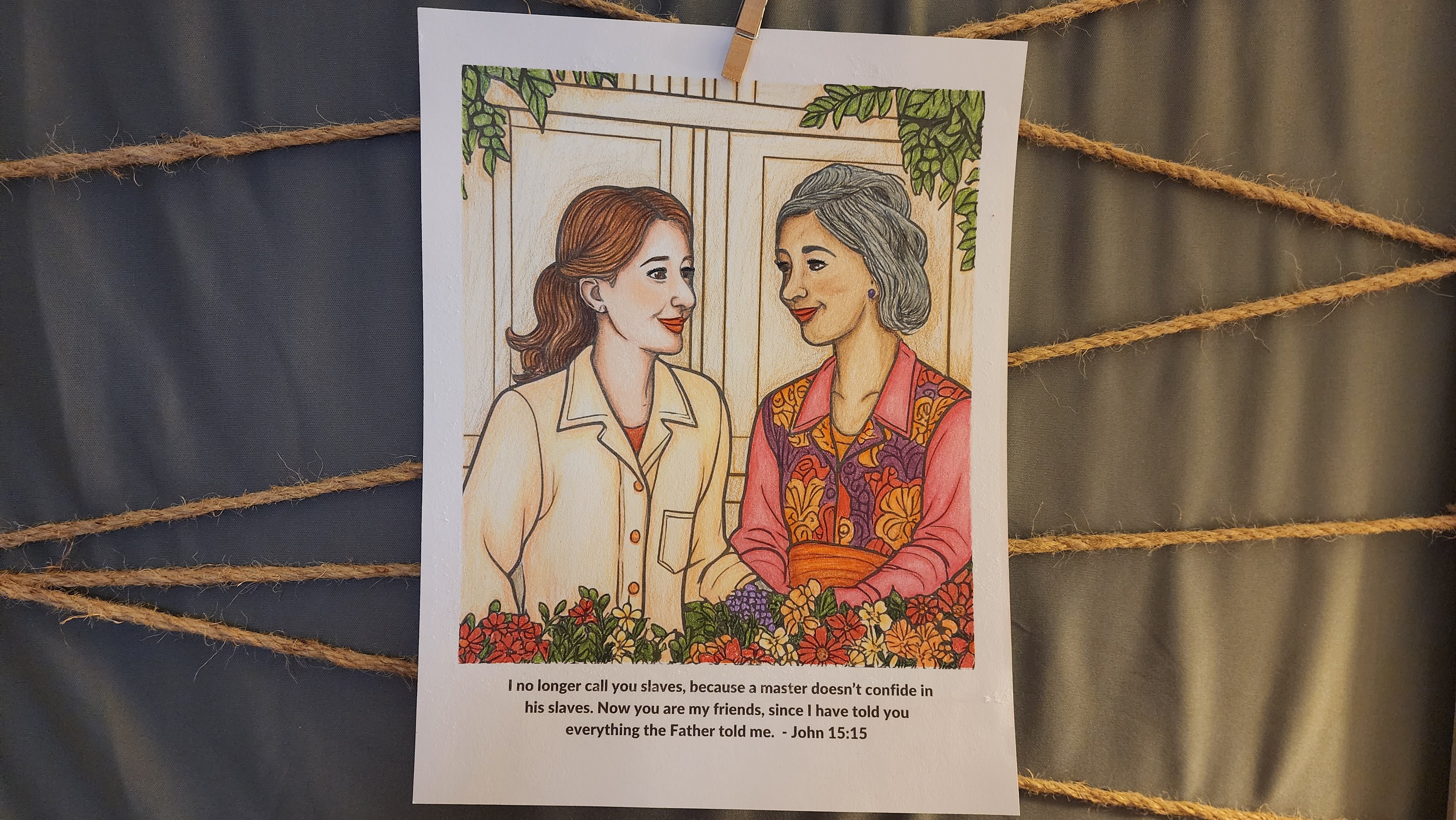
That picture is what guided the coloring page chosen to accompany this devotional from Who Am I, centered on Jesus’ words in John 15:15 (NLT): “I no longer call you slaves… Now you are my friends.”
Click here for coloring details
The image shows two women seated close together. They are facing one another, making eye contact. One appears to have reached for the other’s hand. Nothing about the scene feels rushed or shallow. This is not small talk. This is the kind of conversation you don't want to end.
I intentionally chose women for this image because female friendships often model emotional depth in a way many of us instinctively understand. Women tend to listen longer, ask deeper questions, and offer care without embarrassment. Physical affection—leaning in, holding a hand, meeting someone’s eyes—isn’t awkward here. It’s normal. Necessary, even.
One woman appears older, with gray hair. She carries herself like someone who has lived, learned, and paid for her wisdom the hard way. I colored her clothing with bright, intricate patterns—not loud, but alive. It was the only way I could visually represent a mind that is thoughtful, creative, and engaged while still remaining calm and steady. She feels like a nurturer. The kind of person who makes you feel like your story matters before you've even finished telling it.
The setting around them is intentionally simple: clean walls, greenery and flowers, nothing cluttered or chaotic. A place that says: you can say the real thing here.
The other woman appears younger and plainer. That choice was deeply personal. When I need guidance, when I’m unsure or worn down, that’s often how I feel—less articulate, less confident, unsure if what I want to talk about will even matter to the other person. I think a lot of us know that feeling. And honestly, that’s how many of us feel when we come to God.
We listen to God well when we need something. We pray for others. We pour out our concerns. But what if, after hearing us—after comforting us, offering wisdom, meeting us with grace—God wanted to share what’s on His heart too?
What if He wanted to talk about the people He loves, the work He’s doing, the things He’s inviting us into?
And what if our response, even unintentionally, sounds like: “Maybe later. I’m too busy right now.”
That would feel hurtful in any real friendship. Yet it’s easy to slip into treating God like a distant authority figure—or worse, like someone we approach only when we want something. We imagine Him as far away, busy, or silently disappointed. We assume the relationship is one-sided: we speak, He listens. End of conversation.
But John 15:15 challenges that entire perception.
Jesus doesn’t describe a distant God or a transactional relationship. He describes friendship. Mutuality. Trust. A God who confides, not just commands. A God who speaks, not just receives requests.
The way these women are positioned—facing each other, touching, fully engaged—was intentional. Friendship requires presence. It requires listening both ways. And it requires letting go of the idea that we are merely a time slot on God’s schedule or a problem He tolerates.
If God calls us friends, then our understanding of the relationship may be smaller than what He intends. And if we keep it that way, we miss out—not just on comfort, but on connection. On purpose. On knowing His heart as well as being known by Him.
So the image asks a quiet but confronting question, one that lingers longer than the coloring itself: Are you His friend too?
Not just someone who talks to God—but someone willing to listen when He speaks.
If you want to practice that kind of listening — gently, without pressure — Color, Reflect, Breathe gives you a quiet place to start. It's free. It's yours.
Access the entire study. The devotional this post is based on is found in the devotional Who Am I. Click here.